
University Park Previous Residents Sources
Each source answers a narrower question about who lived here before. The Dallas County Clerk index follows recorded legal transactions. Directories and census schedules can show a time-stamped household or listing. Maps help translate a modern address to an older lot or block. Permits and Brown Books can date physical work, but not a move or a sale. Begin with the period in question, then move across the sources rather than expecting any one record to carry the whole history.
| Source | Years It Covers | Where Held | What It Shows |
|---|---|---|---|
| Dallas County Clerk OPR | Portal certified through 02/16/2026; exact start not located | Online portal and 500 Elm counter | Grantor, grantee, instrument, and legal description |
| Dallas City Directory, no. 190 | 1873-1979; later years through 1996, with gaps | Dallas Public Library | Named listings and citywide address context |
| Dallas Cross Reference, no. 193 | 1936-2019 ranges and gaps | Dallas Public Library | Address-to-name route |
| Park Cities directories | No. 549: 1970, 1981, and listed 1988-2010 ranges; no. 779: 1997 | Dallas Public Library | Park Cities telephone and address context |
| Dallas Morning News | 1885-1984 online plus microfilm | Dallas Public Library | Obituaries, notices, and community clues |
| Federal census | Decennial schedules released through 1950 | NARA and library resources | Household composition and block context |
| Murphy & Bolanz maps | 1880-1920 | DPL Recollect | Dallas County blocks and additions |
The SMU digitized Dallas Negro directory covers 1941-42, with related parts and 1947-48 additions referenced by SMU. Sanborn sheet years for a specific University Park block remain unconfirmed, so check the sheet index before claiming coverage. Probate has permanent-retention series, but access and restrictions vary. That uncertainty belongs in the research notes, not in a guessed date range.
University Park Parcel Card First
For a University Park address, begin at the Dallas Central Appraisal District address search. The parcel card can identify the account number, situs address, current owner label, mailing address, legal description, subdivision, exemption links, and history tabs. Record the legal description exactly. It may show the lot, block, addition, County Clerk instrument number, or an effective document date that makes the next search more precise.
Keep the fields separate. The situs address is the mapped property location. The mailing address is where tax notices go. A legal description is the lot, block, subdivision, or other land identifier used in the recorded instrument. Neither the owner label nor a mailing address alone shows who lived at the property. That distinction makes a past-resident trail more reliable from its first step.
Note: Save the account number and legal description with the search date because DCAD current data and parcel history can change.
University Park Deed Chain Backward
The Dallas County Clerk Official Public Records portal is the transaction layer for University Park past residents research. It offers Quick Search and Advanced Search, grantor and grantee fields, date ranges, instrument numbers, subdivision terms, document types, and an index-only or index-and-full-text OCR mode, which searches text extracted from document images. The page was certified through 02/16/2026 when researched, but the official material did not establish its oldest online year. Use the counter for a gap rather than treating an online no-result as the end of the chain.
- Copy the current parcel's owner label, lot or block, legal description, and any instrument number from DCAD.
- Search the instrument number or current owner as grantee in the Clerk index, then identify the conveyance deed and its legal description.
- Record each grantor, grantee, recorded date, document number, and lot or subdivision wording before moving back.
- Search the seller, now the earlier grantee, in an earlier date range using the same legal description.
- Repeat the comparison. When wording changes, use a plat, replat, prior deed reference, or release to bridge the description.
- Grantor
- The party transferring an interest in a recorded document.
- Grantee
- The party receiving that interest. In a backward search, the earlier grantor is often found as a grantee on a prior purchase.
- Chain of title
- The ordered set of recorded transfers connected through the same property identifier.
- Legal description
- The recorded land description. It is generally steadier than a postal street address when an older document is being matched.
Review the linked Official Public Records search before the image below.
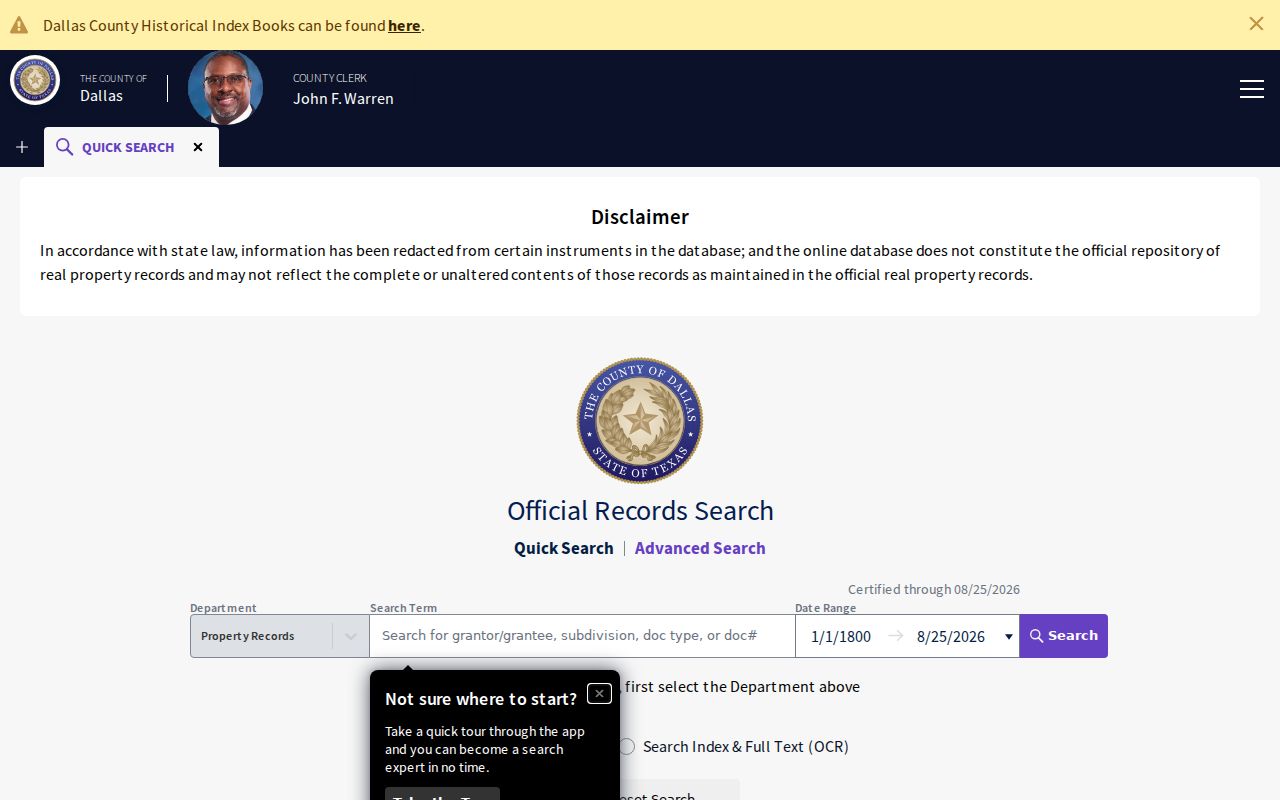
Instrument numbers and the legal description deserve more weight than a modern street line. A recorded deed documents a legal transaction; it does not prove that its grantor, grantee, or another person occupied the property.
University Park Deed Copy Channels
A search result is not a certified record. For an image, a plain copy, or a certified copy, use the County Clerk's request route or the recording counter at 500 Elm Street, Suite 2100, Dallas, TX 75202. The Recording Division lists 214-653-7099. The document request form asks for the requester, recorded grantor or grantee, instrument number, document type, and property address. The form also supports a plain or certified selection.
The researched fee is $1 per page or document for a plain copy. Certification adds $5 per document. Mail requests go to the Dallas County Clerk Recording Division, Attn Index, 500 Elm Street, 2nd Floor, Dallas, TX 75202, with the form's required payment method and prepaid self-addressed envelope. The counter and mail channel matter when a needed image, older index segment, or formal copy is not available online.
University Park Past Household Pairing
Owners are only part of the University Park previous residents story. Once the parcel is anchored by its legal description, choose the nearest Dallas Cross Reference or Park Cities directory volume and search the address as it appeared in that year. Record the listed name, edition, number, street spelling, and any notation. Then use the federal census closest to that directory year, released through 1950, for household composition and address or block context.
- Start with the directory closest to the transfer or house-change date suggested by the deed chain.
- Use the cross-reference or Park Cities volume for the address-first path, then compare a name directory where available.
- Pair the directory with the closest released census schedule and preserve the page or enumeration context.
- Use a deed, map, or obituary to test an apparent move, death, inheritance, or sale.
- Open the next available directory edition to see whether the household listing changed.
The historical shelf is described in more detail on the University Park city directory collections page. A directory listing is a dated association. It should not be rephrased as present occupancy, and it may omit people who were not listed in that title.
Read the Dallas History & Archives collection page before the image below.
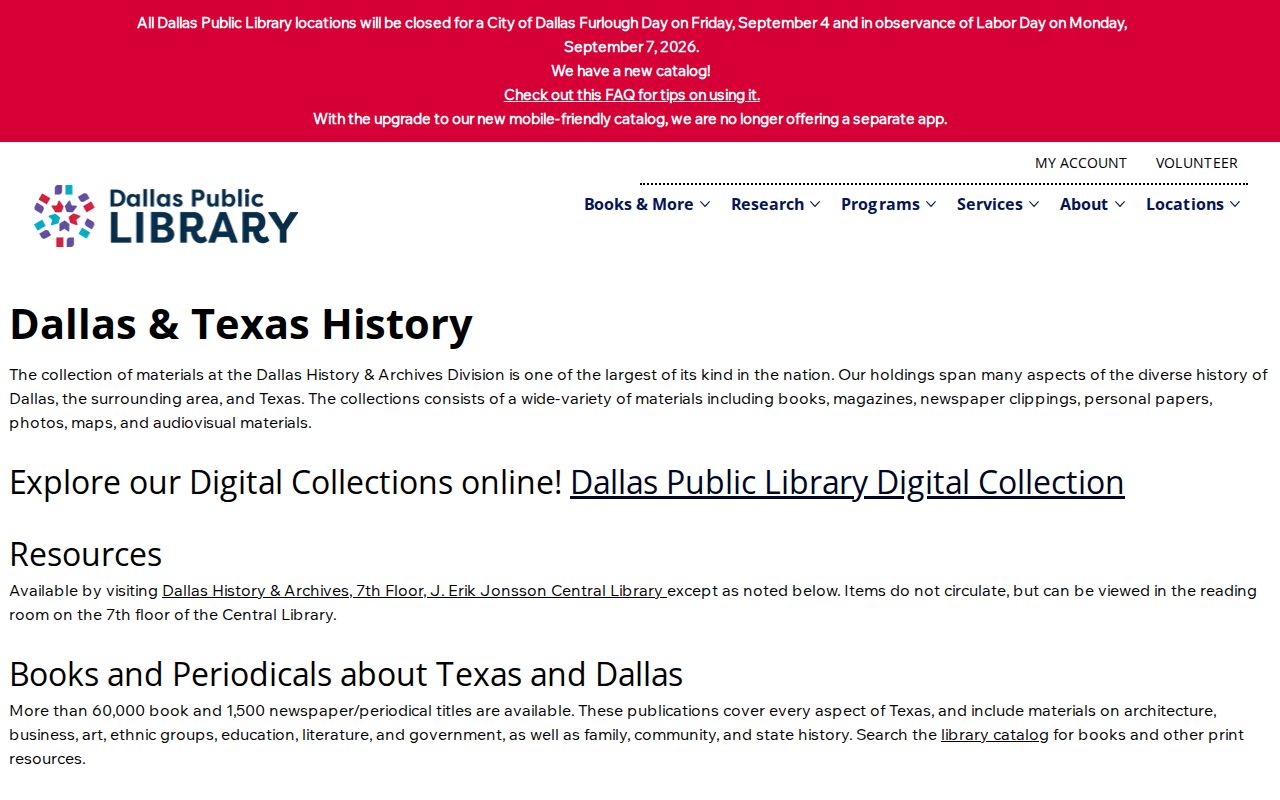
DPL's History & Archives reading room is on the seventh floor of J. Erik Jonsson Central Library. Its staff and microfilm readers are a fallback for cross-reference volumes, telephone books, and newspaper research that a web search cannot supply.
University Park Previous Residents Maps
Dallas Public Library's historic-building guide recommends a deliberate sequence: current address or legal description, then directories, maps, deeds, and newspapers. For early work, it points to a 1901 street listing and online Dallas directories. Murphy & Bolanz Block and Addition Books cover Dallas County from 1880 to 1920 and can help translate an address to a lot or addition. Sanborn maps can show building footprint, use, material, and nearby intersections, but their exact University Park sheet coverage was not confirmed.
SMU also makes a 1941-42 Dallas Negro city directory available through its DeGolyer digital collection. The collection describes names, addresses, schools, churches, officials, businesses, photographs, and advertisements. It is a valuable community-specific layer. Check the actual page image before transcribing a person because no sample entry was captured in the research.
Open the SMU digitized directory record before reviewing the image.
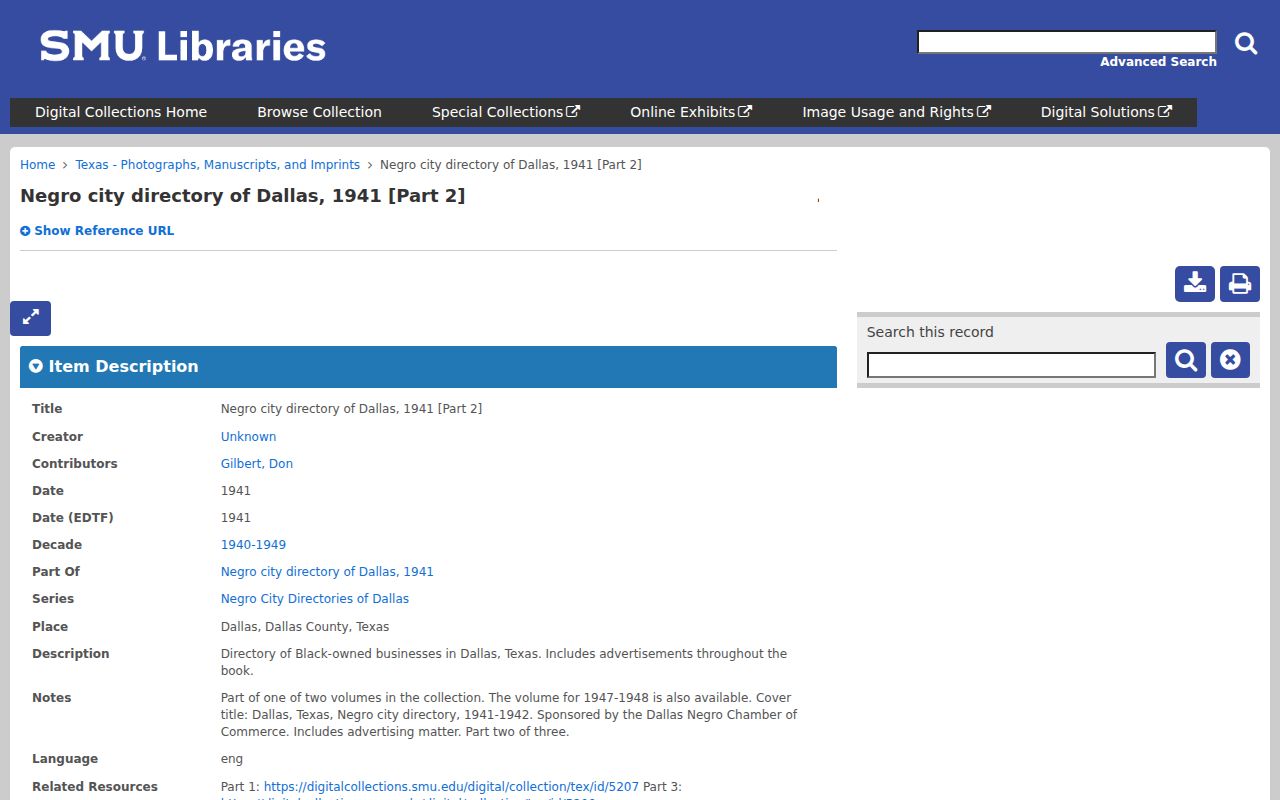
Note: Match historic street names, intersections, lot shapes, and the legal description before deciding that two similar address lines identify the same place.
University Park Past Residents House Clues
Construction records can date a house change without proving a household change. University Park's Building Permits page provides permit information, plan-submittal materials, and a monthly activity report. A permit can identify the address, type of work, applicant or contractor, inspection status, plan review, or final inspection. The city says a permit generally expires after 60 days without inspections, which is an administration rule rather than a move date.
The University Park Public Library's Brown Books add a distinctive local lead: thousands of subdivision records of individual construction permits for University Park homes across several decades. Exact volumes, a complete year list, and a public search form were not located. Ask library staff or check the catalog before assigning a date range. Brown Books and permits can support a construction or alteration chronology, but they do not establish a sale, ownership, or residence without a deed or directory match. For an older city-held permit record, send a defined address and date range through the University Park public-information request channel.
University Park Previous Residents Endpoints
Obituaries and probate records can help close a past-resident trail. Dallas Morning News is available online through DPL for 1885-1984 with library access, while print and microfilm add other newspaper runs. An obituary may supply a spouse, children, funeral home, church, former address, or date clue. A probate file can identify heirs, an executor, an attorney, assets, notices, and the legal succession of an estate. Use the filed court record or certified source when legal status matters.
Dallas County probate has permanent-retention series, though availability and restrictions vary by case and year. The Clerk's probate information provides the appropriate channel for a record request. Treat a newspaper notice as a research lead and avoid publishing protected personal details. A proof chain should be built from the custodian record, the recorded instrument, and the historical listing, not from one isolated mention.
Lawful use. University Park house history and family research are legitimate personal uses. Do not use an old record to track, harass, or harm a living person; Texas law prohibits stalking and custodians may protect confidential addresses.